Beyond Interpretivism?
New Encounters with Technology and Organisation
|
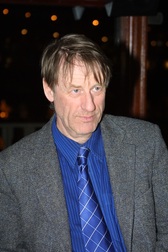
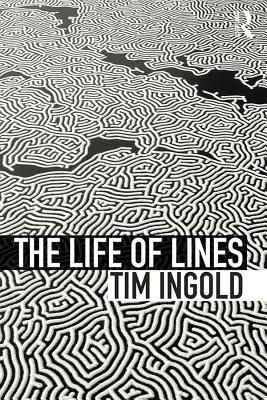
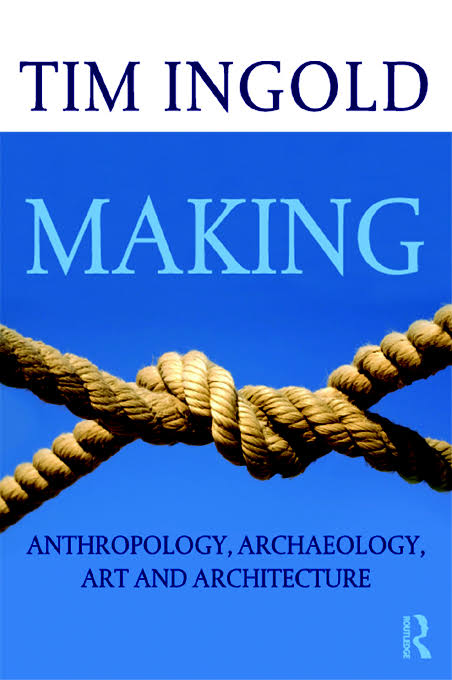
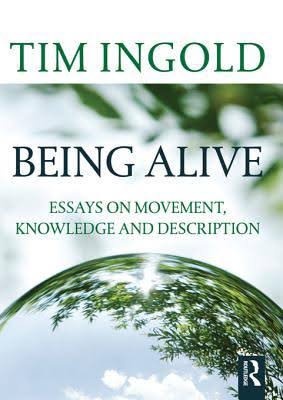
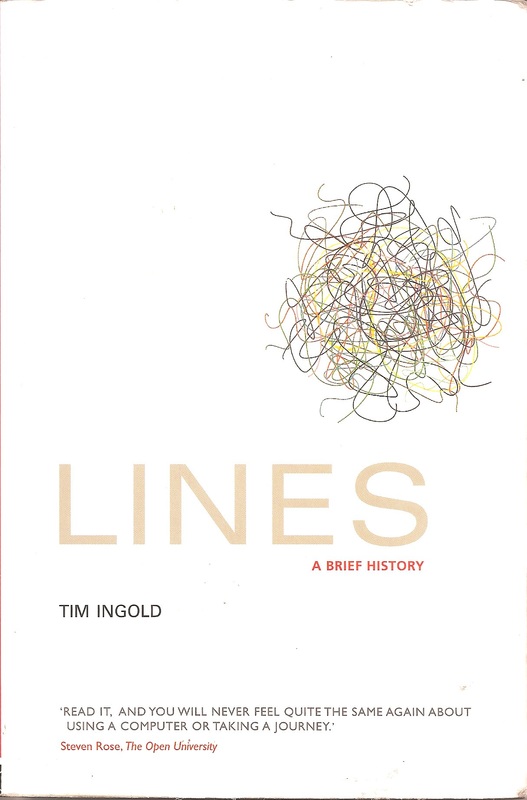
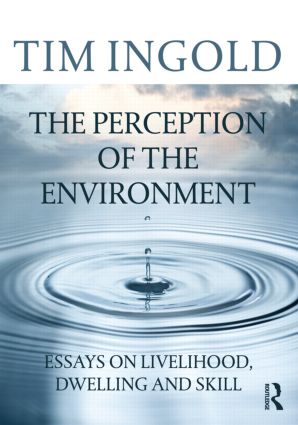
Tim Ingold is Professor of Social Anthropology at the University of Aberdeen, and a Fellow of both the British Academy and the Royal Society of Edinburgh. Following 25 years at the University of Manchester, where he was appointed Max Gluckman Professor of Social Anthropology in 1995, Ingold moved in 1999 to Aberdeen, where he went on to establish the UK’s newest Department of Anthropology. Ingold has carried out ethnographic fieldwork among Saami and Finnish people in Lapland, and has written on comparative questions of environment, technology and social organisation in the circumpolar North, as well as on the role of animals in human society, on issues in human ecology, and on evolutionary theory in anthropology, biology and history. In his more recent work, he went on to explore the links between environmental perception and skilled practice. Ingold’s latest research pursues three lines of inquiry that emerged from his earlier work, concerning the dynamics of pedestrian movement, the creativity of practice, and the linearity of writing. He is currently writing and teaching on issues on the interface between anthropology, archaeology, art and architecture. Ingold is the author of many books, including The Perception of the Environment (2000), Lines (2007), Being Alive (2011), Making (2013) and The Life of Lines (2015).
|
One World Anthropology- McGill University. As philosophical fashions lurch from one extreme to the other — from the hyper-relativism of the cultural construction industry to the ever-multiplying essentialisms of the 'ontological turn' — it is worth re-emphasising a core principle of anthropology which we neglect at our peril. It is that we human beings, along with other inhabitants of the planet, are creatures not of many worlds all but closed to one another, but of one world that is fundamentally open. Every life, then, is both an exploration into the possibilities of being that this world affords and a contribution towards its ongoing formation. Here I spell out three critical implications of this principle. First, the capacities and dispositions of human beings, whatever they may be, are formed within histories of pre- and post-natal ontogenetic development, under environmental conditions that have themselves been shaped by previous human and non-human activity. Our primary concern, therefore, must be not with ontologies but ontogenies, with generations rather than philosophies of being. Secondly, practices of learning and teaching, long and unjustly marginalised in an anthropology that remains obsessed with the shapes and forms of mature thought, should be restored to the centrality they deserve. And thirdly, the oneness of the world is founded not on similarity but difference — on difference, nevertheless, that arises from within the universe of relations that make it up.
Royal Anthropological Institute’s Discover Anthropology Programme On Human Correspondence- Huxley Memorial Lecture. “To live, every being must put out a line, and in life these lines tangle with one another. This book is a study of the life of lines. Following on from Tim Ingold’s groundbreaking work Lines: A Brief History, it offers a wholly original series of meditations on life, ground, weather, walking, imagination and what it means to be human. * In the first part, Ingold argues that a world of life is woven from knots, and not built from blocks as commonly thought. He shows how the principle of knotting underwrites both the way things join with one another, in walls, buildings and bodies, and the composition of the ground and the knowledge we find there. * In the second part, Ingold argues that to study living lines, we must also study the weather. To complement a linealogy that asks what is common to walking, weaving, observing, singing, storytelling and writing, he develops a meteorology that seeks the common denominator of breath, time, mood, sound, memory, colour and the sky. This denominator is the atmosphere. * In the third part, Ingold carries the line into the domain of human life. He shows that for life to continue, the things we do must be framed within the lives we undergo. In continually answering to one another, these lives enact a principle of correspondence that is fundamentally social. This compelling volume brings our thinking about the material world refreshingly back to life. While anchored in anthropology, the book ranges widely over an interdisciplinary terrain that includes philosophy, geography, sociology, art and architecture.”
Yellowknife Tedx. On September 19-21 2014, the Tłı̨chǫ Government, the Prince of Wales Northern Heritage Centre and the Canadian Polar Commission hosted a multi-event symposium called Įłàà Katı̀ to advance the understanding and uses of Traditional Knowledge.
The symposium offered insights into the potential of traditional Aboriginal knowledge with presentations from a wide range of perspectives. The purpose of the symposium was to broaden the appreciation of TK’s relevance in contemporary society, including government and industry, furthering the reconciliation of TK and Western ways of knowing and building partnerships aimed at increasing the evidence-based application of traditional knowledge. One key part of the symposium was TEDx Yellowknife, an independently organized TED event on traditional knowledge held at the Explorer Inn in Yellowknife.
The symposium offered insights into the potential of traditional Aboriginal knowledge with presentations from a wide range of perspectives. The purpose of the symposium was to broaden the appreciation of TK’s relevance in contemporary society, including government and industry, furthering the reconciliation of TK and Western ways of knowing and building partnerships aimed at increasing the evidence-based application of traditional knowledge. One key part of the symposium was TEDx Yellowknife, an independently organized TED event on traditional knowledge held at the Explorer Inn in Yellowknife.

|

|

|

|

|
